Как обуздать свои эмоции?
Опубликовано Forex2 в вс, 03/05/2009 - 11:02

Один из наиболее часто задаваемых вопросов – какие психологические установки и психическими параметры необходимы, чтобы быть действительно успешным трейдером. В то время как существует множество книг по психологической стороне торговли, один, актуальный вопрос для большинства настоящих трейдеров остается в прошлом. От убытков трудно оправиться и чем больше убытки, тем труднее их компенсировать. Но возврат потерь - не единственная проблема. Как это ни странно может звучать, вы также часто должны забывать о своих больших победах.
Вероятность в торговле
Опубликовано Forex2 в вс, 03/05/2009 - 10:59

Это естественно, что трейдеры не могут всегда выигрывать, потому что с доходом возникает и риск, и потери являются неотъемлемой частью торговли. Но существует кое-что, что необходимо знать о процессе торговли и что выходит за рамки долларовых значений. Как трейдерам двигаться в правильном направлении своего развития, чтобы быть уверенным, что их усилия смогут продвинуть их к будущему успеху? Это зависит не только от того, чтобы правильно выполнять сделки, но также и от того, чтобы избежать потенциальных ошибок.
Чего боится трейдер и как с этим бороться
Опубликовано Forex2 в вс, 03/05/2009 - 10:57
Томас Карр, иначе "доктор Стокс", является ведущим трейдером в «Trend Trading Systems». Он также является доктором Философии Оксфордского Университета. У него взяли интервью «Уолл Стрит джорнал», «US News» и «World Report» по поводу его взгляда на психологию торговли.
The Greatest Bull Market in History. M. Armstrong
Опубликовано Forex2 в сб, 02/05/2009 - 17:43

When I began this project, the name I originally selected the "The Dow & The
Future." The more I explored the past, the more it became clear that is was impossible to discuss purely the stock market without involving not merely economics, but also foreign exchange and commodity price movement as well as the events within the eternal sea of politics itself. No matter who takes up the crusade to write of events long since past, they often begin with some preconceived notion of what may have taken place. Others often select facts which only support their own distorted or personal views. I should state for the record that when I began this project, I was under several false assumptions.
The Global Money Markets. F. Fabozzi, S. Mann, M. Choudhry
Опубликовано Forex2 в сб, 02/05/2009 - 17:30
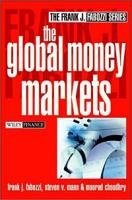
Frank J. Fabozzi is editor of the Journal of Portfolio Management and an adjunct professor of finance at Yale University’s School of Management. He is a Chartered Financial Analyst and Certified Public Accountant. Dr. Fabozzi is on the board of directors of the Guardian Life family of funds and the BlackRock complex of funds. He earned a doctorate in economics from the City University of New York in 1972 and in 1994 received an honorary doctorate of Humane Letters from Nova Southeastern University. Dr. Fabozzi is a Fellow of the International Center for Finance at Yale University. He is an Advisory Analyst for Global Asset Management (GAM) with responsibilities as Consulting Director for portfolio construction, risk
control, and evaluation.
The day trade FOREX system. The Ultimate Step-By-Step Guide to Online Currency Trad. E. Bortucene, C. Macy
Опубликовано Forex2 в сб, 02/05/2009 - 17:15
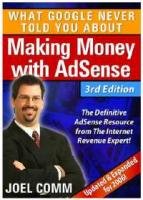
The Foreign Exchange, also referred to as the "Forex" or "Spot FX" market, is
the largest financial market in the world, with over $1.2 trillion changing hands
every single day. If you compare that to the $25 billion a day volume that the
New York Stock Exchange trades, you see how giant the Foreign Exchange
really is. In fact it is three times larger than all of the US Equity and Treasury
markets combined! What is traded on the Foreign Exchange? The answer is money. Forex trading is where the currency of one nation is traded for that of another. Therefore, Forex trading is always traded in pairs. The most commonly traded currency pairs are traded against the US Dollar (USD). They are called ‘the Majors'. The major currency pairs are the Euro Dollar (EUR/USD); the British Pound (GBP/USD); the Japanese Yen (USD/JPY); and the Swiss Franc (USD/CHF).
Technical Analysis from A to Z. S. Achelis
Опубликовано Forex2 в сб, 02/05/2009 - 16:56
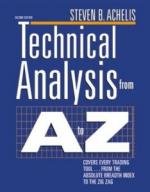
Over the last decade I have met many of the top technical analysis "gurus" as well as shared experiences with thousands of newcomers. The common element I've discovered among investors who use technical analysis, regardless of their expertise, is the desire to learn more. No single book, nor any collection of books, can provide a complete explanation of technical analysis. Not only is the field too massive, covering every thing from Federal Reserve reports to Fibonacci Arcs, but it is also evolving so quickly that anything written today becomes incomplete (but not obsolete) tomorrow. Armed with the above knowledge and well aware of the myriad of technical analysis books that are already available, I feel there is a genuine need for a concise book on technical analysis that serves the needs of both the novice and veteran investor. That is what I have strived to create.
Short Term Trading Analysis. V. Daragan
Опубликовано Forex2 в сб, 02/05/2009 - 16:50
Stock prices go up and down. It would seem that it is simple to make a fast profit from day trading. You need to buy stocks after a price drop and sell them after some time with a profit. Unfortunately, this is a minus sum game. Bad stock selection can easily kill you. The faster you trade, the faster your losses become large. Every transaction has a cost: bid-ask spread and brokerage commissions. Very tiny profits will disappear in a long run when you take into account these transaction costs. Nevertheless, day traders still exist and many of them are very rich people. How did they do that? If you are a professional and trading on the floor of the exchange you can look for micro trends and catch the leaving train right on time. Big capital and zero commissions allow you to make micro profits constantly.
Sector Investing and Business Cycles. G. Dagnino
Опубликовано Forex2 в сб, 02/05/2009 - 16:44
Managing a portfolio is not easy. If someone tells you there is an easy formula to
successful investing it is not true. Especially if you want to manage all your money, not just play money. A portfolio requires time, study, and analysis. If you want to manage play money, find someone who gives you tips, and go gamble. In order to manage all your assets, you need an investment process. This book starts from where “Profiting in Bull or Bear Markets” concluded. Profiting in Bull or Bear Markets presented a detailed analysis of the relationships existing between financial markets and business cycles. In any economic system, business cycles impact financial markets and financial markets impact business cycles. That book provided a framework to understand these relationships and showed that history does indeed repeat itself.
Profiting in Bull or Bear Markets. G. Dagnino
Опубликовано Forex2 в сб, 02/05/2009 - 16:39
This book is the result of more than 20 years of studying the behavior of business and financial cycles and their impact on investment management. My viewpoint has been influenced by my graduate work at Case-Western Reserve in Cleveland, Ohio, where I received a Ph.D. Case was well known for its advanced studies and research in the field of management science, information systems, and artificial intelligence. For several years after graduation I reflected on the meaning and implications of what I learned. Finally I realized that the entire program was about “the engineering of thinking.” It was about the logical, structured thought process that is typical in the field of artificial intelligence. The main assumption of this branch of computer sciences is that
human thinking can be duplicated. Anything produced by the mind is the outcome of a sequence of logical steps that, when taken all together, can be recognized as thought.
- « первая
- ‹ предыдущая
- …
- 5542
- 5543
- 5544
- 5545
- 5546
- 5547
- 5548
- 5549
- 5550
- …
- следующая ›
- последняя »

Основы